
HomeClinics
What to expect at a clinic
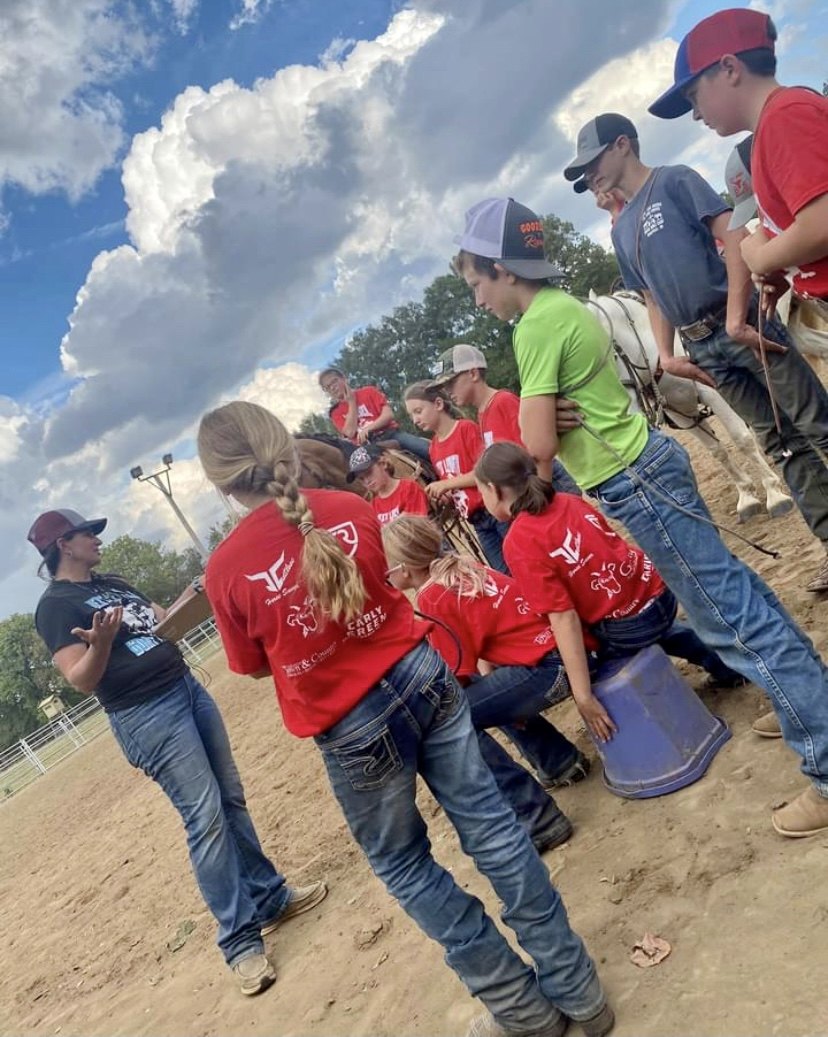
Here’s how a clinic runs, what to pack and what parents can do to help. The clinic schedule and stall and hookup information come by email about two weeks before.
What we work on
- Evaluation
- We get to know each student and see where they are on day one.
- Approach and flanking position
- Where to be when you get to the goat, every time.
- Flanking
- We keep the goat straight and push the bottom leg down so the back legs land on the front leg.
- The tie
- We’re known for cotton strings, and Lyles strings are there to try.
- Athleticism
- Agility ladders, strengthening, stretching and speed drills.
- The mental side
- Focus, routines and how to compete under pressure.
- Dismounting
- Instructors work with problem horses, and a dismounting dummy is on site.
- Slow work, then rodeo runs
- Muscle memory first, then relays, matches and full runs.
The schedule
Day one
- 9 to noon Evaluation and groundwork
- Noon to 1 Lunch (provided)
- 1 to 2 Groundwork review
- 2 to 4 Dismounting, horse training and rodeo runs
Day two
- 8 to 11 Groundwork and rodeo situations
- 11 to 1 Dismounting, horse training and runs
- 1:30 Dismissed
Times vary a little by clinic. Your clinic’s schedule comes by email.
What to bring
- Drinks for the day
- Cowboy boots (no thick soles)
- A sturdy roping saddle with wide stirrups (no barrel saddles or gripping stirrups)
- Tack in good repair
- A wool felt pad, or a Navajo blanket under a neoprene pad
Parents
Bring your phone and video your rider. We also need volunteers to hold goats and catch horses, and it’s a great way to learn alongside them.
Payment and the release
Balances are paid online before the clinic starts. A parent or guardian signs the release when registering.